 VisitNyhavn
EN
VisitNyhavn
EN
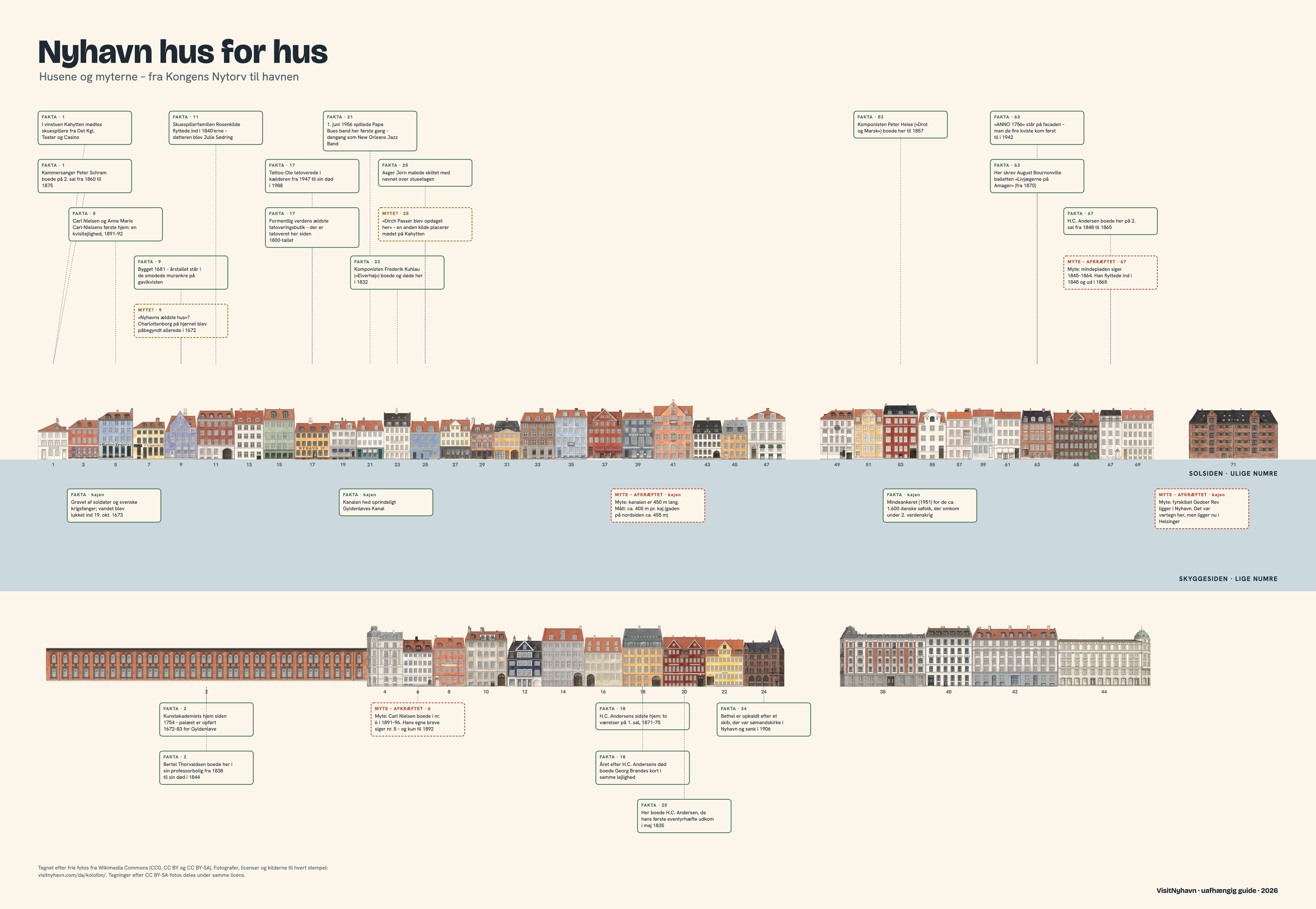
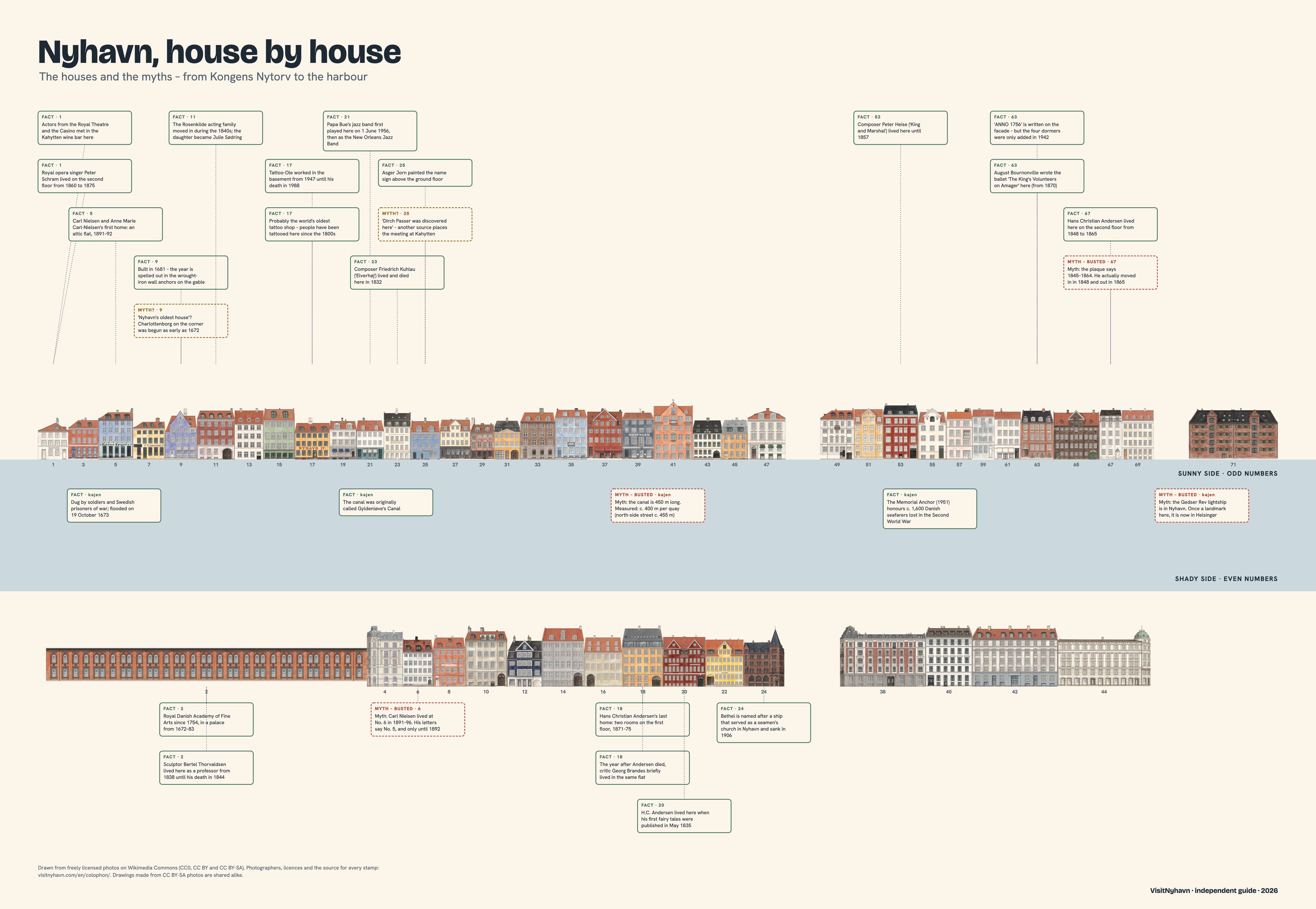
Nyhavn has two sides. The odd numbers line the sunny side to the north, the even numbers the shady side to the south, and the canal runs from Kongens Nytorv out to the harbour. Every stamp below has a source, and where the sources disagree, we say so.
The sunny side – odd numbers
Scroll sideways along the quay, and tap a house number to read about the house.

Nyhavn 1
Nyhavn 5
- FactCarl Nielsen and Anne Marie Carl-Nielsen's first home: an attic flat, 1891–92 Source
Nyhavn 9
Nyhavn 11
- FactThe Rosenkilde acting family moved in during the 1840s; the daughter became Julie Sødring Source
Nyhavn 17
Nyhavn 21
- FactPapa Bue's jazz band first played here on 1 June 1956, then as the New Orleans Jazz Band Source
Nyhavn 23
- FactComposer Friedrich Kuhlau ('Elverhøj') lived and died here in 1832 Source
Nyhavn 25
Nyhavn 53
- FactComposer Peter Heise ('King and Marshal') lived here until 1857 Source
Nyhavn 63
Nyhavn 67
The shady side – even numbers
Scroll sideways along the quay, and tap a house number to read about the house.

Nyhavn 2
Nyhavn 6
- Myth – bustedMyth: Carl Nielsen lived at No. 6 in 1891–96. His letters say No. 5, and only until 1892 Source
Nyhavn 18
Nyhavn 20
- FactH.C. Andersen lived here when his first fairy tales were published in May 1835 Source
Nyhavn 24
- FactBethel is named after a ship that served as a seamen's church in Nyhavn and sank in 1906 Source
The canal
- FactDug by soldiers and Swedish prisoners of war; flooded on 19 October 1673 Source
- FactThe canal was originally called Gyldenløve's Canal Source
- Myth – bustedMyth: the canal is 450 m long. Measured: c. 400 m per quay (north-side street c. 455 m) Source
- FactThe Memorial Anchor (1951) honours c. 1,600 Danish seafarers lost in the Second World War Source
- Myth – bustedMyth: the Gedser Rev lightship is in Nyhavn. Once a landmark here, it is now in Helsingør Source
Download the poster
Both rows of houses and all the stamps on one poster for printing, in Danish and English.
How the houses were drawn
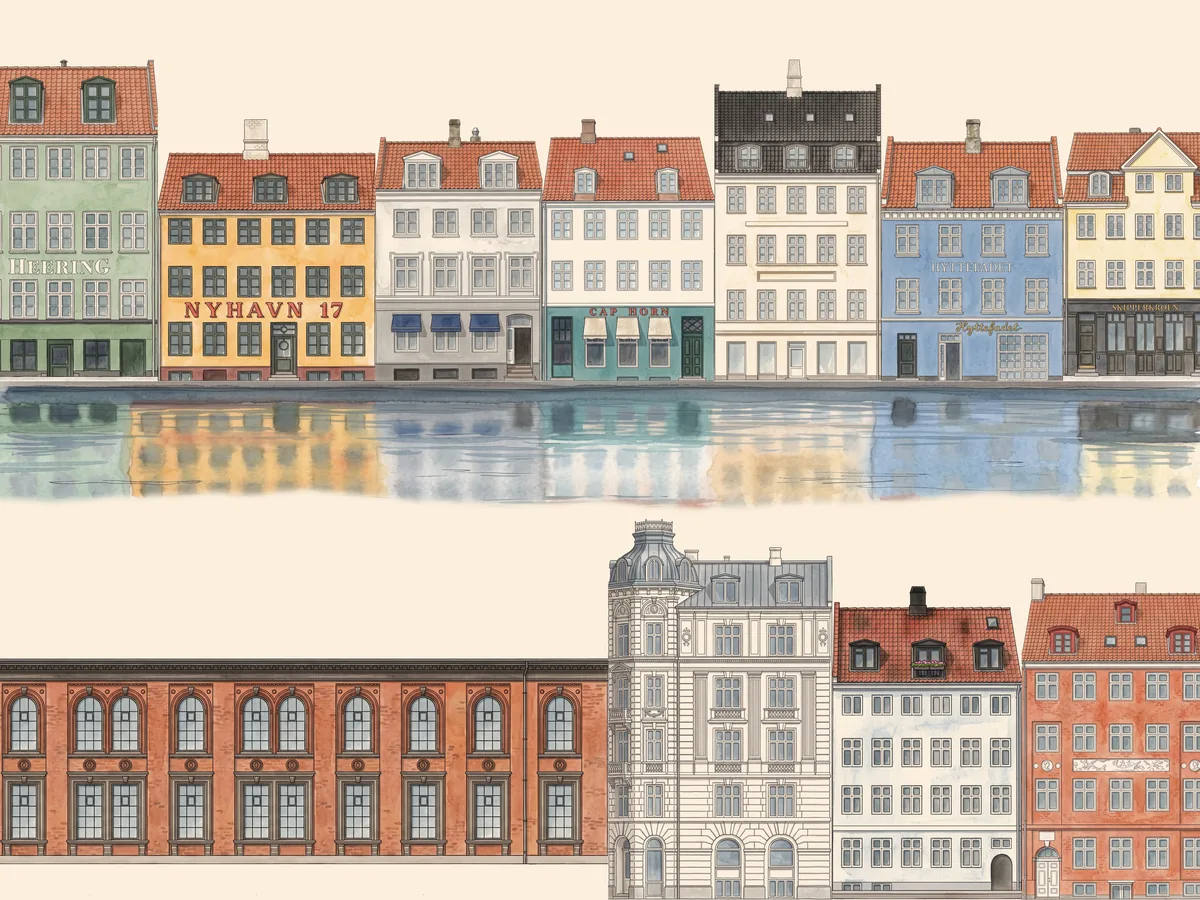
Each house is drawn straight on from a free photo on Wikimedia Commons and placed where it stands on the quay using OpenStreetMap. The drawings are our own, and the photographers and licences are listed in the colophon.