 VisitNyhavn
DE
VisitNyhavn
DE
Die Geschichte von Nyhavn – vom Hafenkanal 1673 zur Touristenattraktion
Nyhavn wurde 1671–1673 von Soldaten und schwedischen Kriegsgefangenen als innerer Handelshafen für Christian V. gegraben. Drei Jahrhunderte lang war es ein Seemannsviertel – Kneipen, Bordelle, Tätowierstudios. Erst in den 1970er-Jahren wurde der Kai in die touristische Kulisse verwandelt, die wir heute kennen.
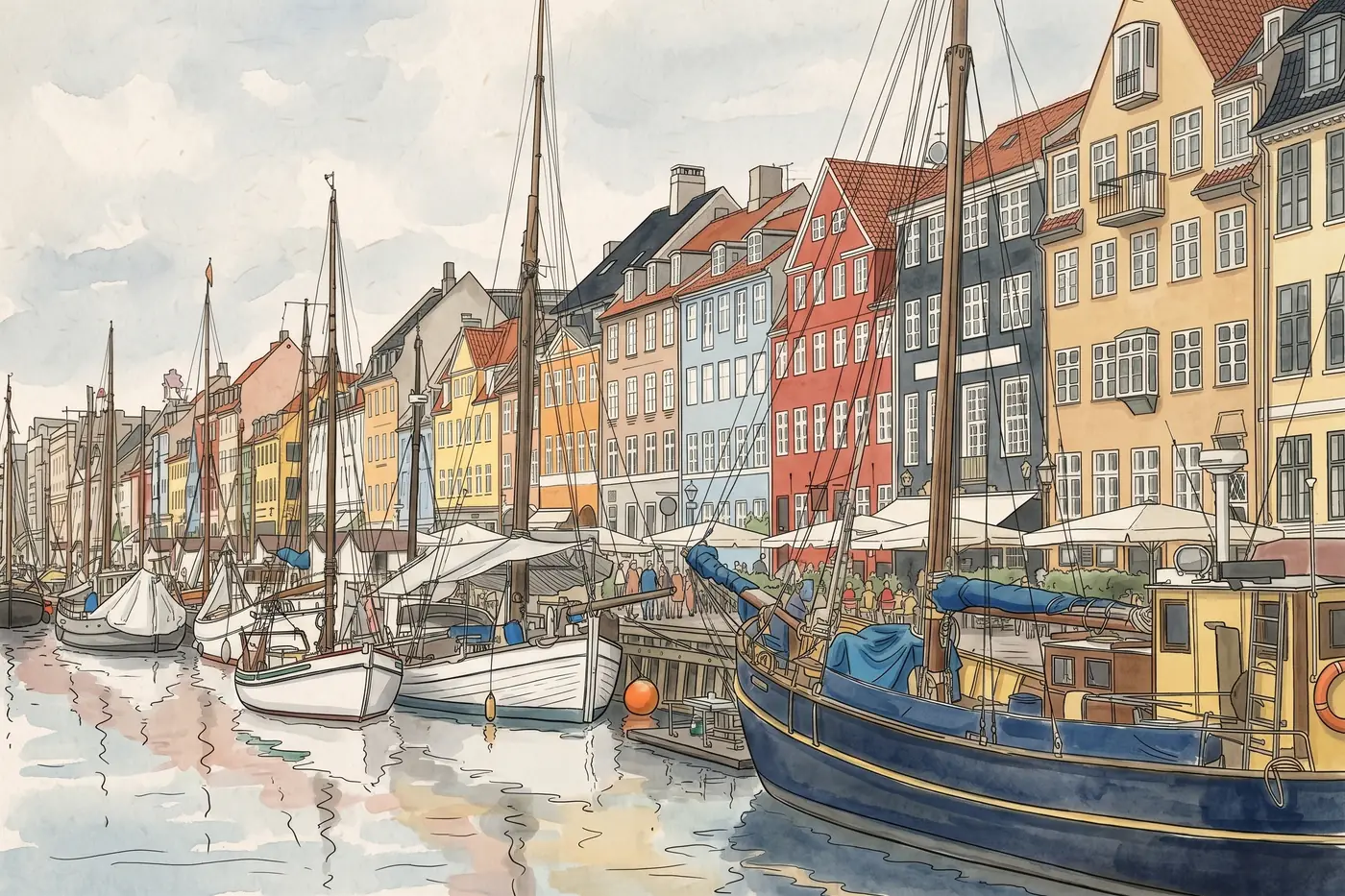
Der in den 1670er Jahren als geschäftiger Handelshafen ausgehobene Nyhavn besitzt eine reiche Geschichte, die von Seeleuten, Handel und dem Schriftsteller Hans Christian Andersen geprägt wurde. Heute sind die erhaltenen Lagerhäuser ein lebendiges Denkmal.
Zehn verifizierte Fakten über den Hafen
Zahlen, die wir dokumentieren konnten – von Adressen und Eröffnungsdaten bis zu Besucherzahlen. Quellen pro Feld vermerkt.
Schätzungen sind gekennzeichnet. Der Rest stammt aus öffentlichen Registern, offiziellen Tarifen oder den eigenen Seiten des Veranstaltungsortes.
Die Geschichte von Nyhavn: häufige Fragen
Warum sind die Häuser in Nyhavn bunt?
Die verputzten Häuser sind meist in hellen Erdfarben gestrichen, die Backsteinhäuser sind rot, einige wenige gelb. Der Bebauungsplan der Stadt schützt dies: Wenn eine Fassade renoviert wird, muss sie ihre ursprüngliche helle Farbe zurückbekommen. Eine beliebte Geschichte besagt, dass Seeleute ihre Häuser an den Farben erkannten – wir haben dafür keine Quelle gefunden.
Hat H.C. Andersen wirklich in Nyhavn gewohnt?
Ja – an drei Adressen: Nyhavn 20 (1834–38), Nyhavn 67 (mit Unterbrechungen, 1848–65) und Nyhavn 18 (1871–74). Seine allerersten Märchen veröffentlichte er 1835 in Nyhavn 20. Gestorben ist er jedoch nicht in Nyhavn.
Wann wurde der Kanal gegraben?
1671–1673, unter Christian V. Er wurde von Soldaten und schwedischen Kriegsgefangenen gegraben und brachte den Welthandel direkt in das neue Zentrum der Stadt, Kongens Nytorv.
Ihr nächster Halt in Nyhavn
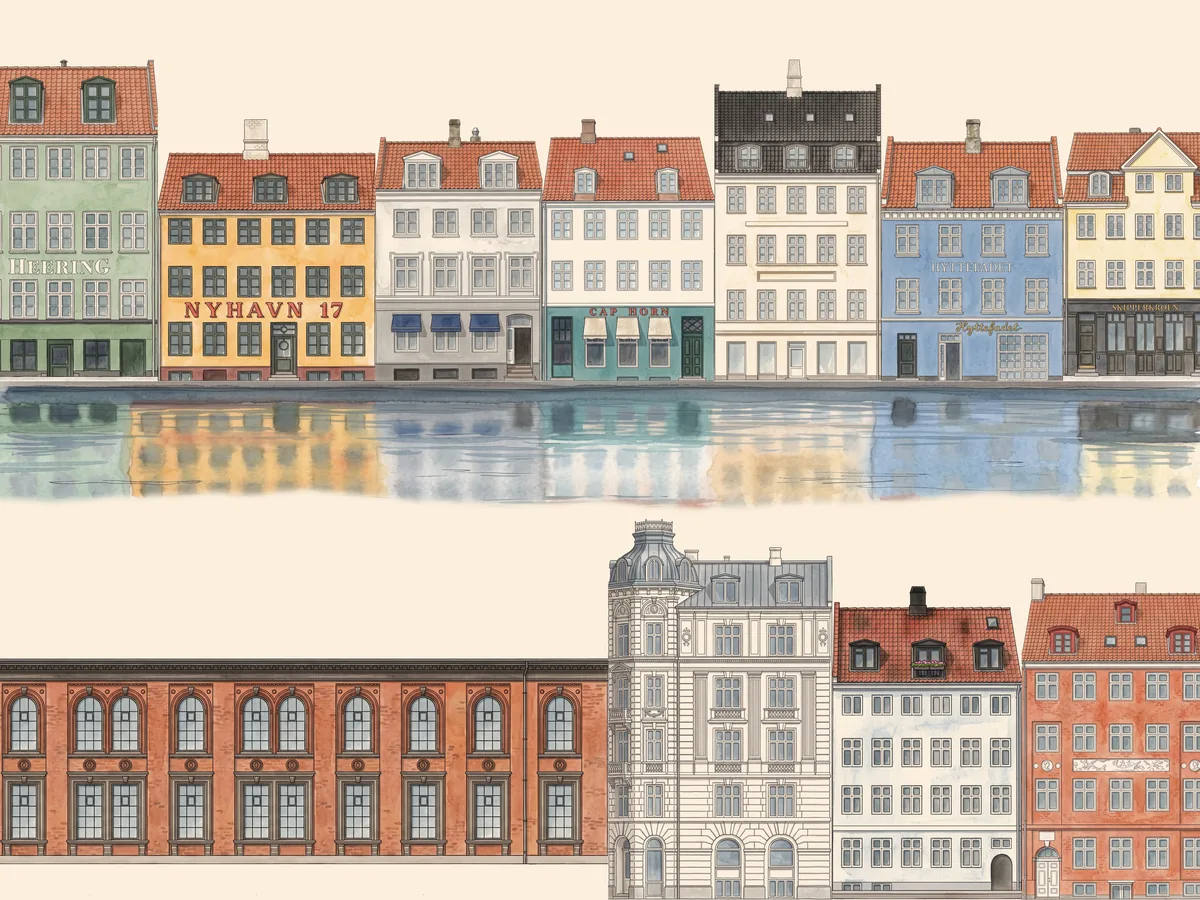
Nyhavn, Haus für Haus
Alle 52 Häuser am Kai als Aquarell – mit den Fakten und den Mythen, die nicht stimmen.
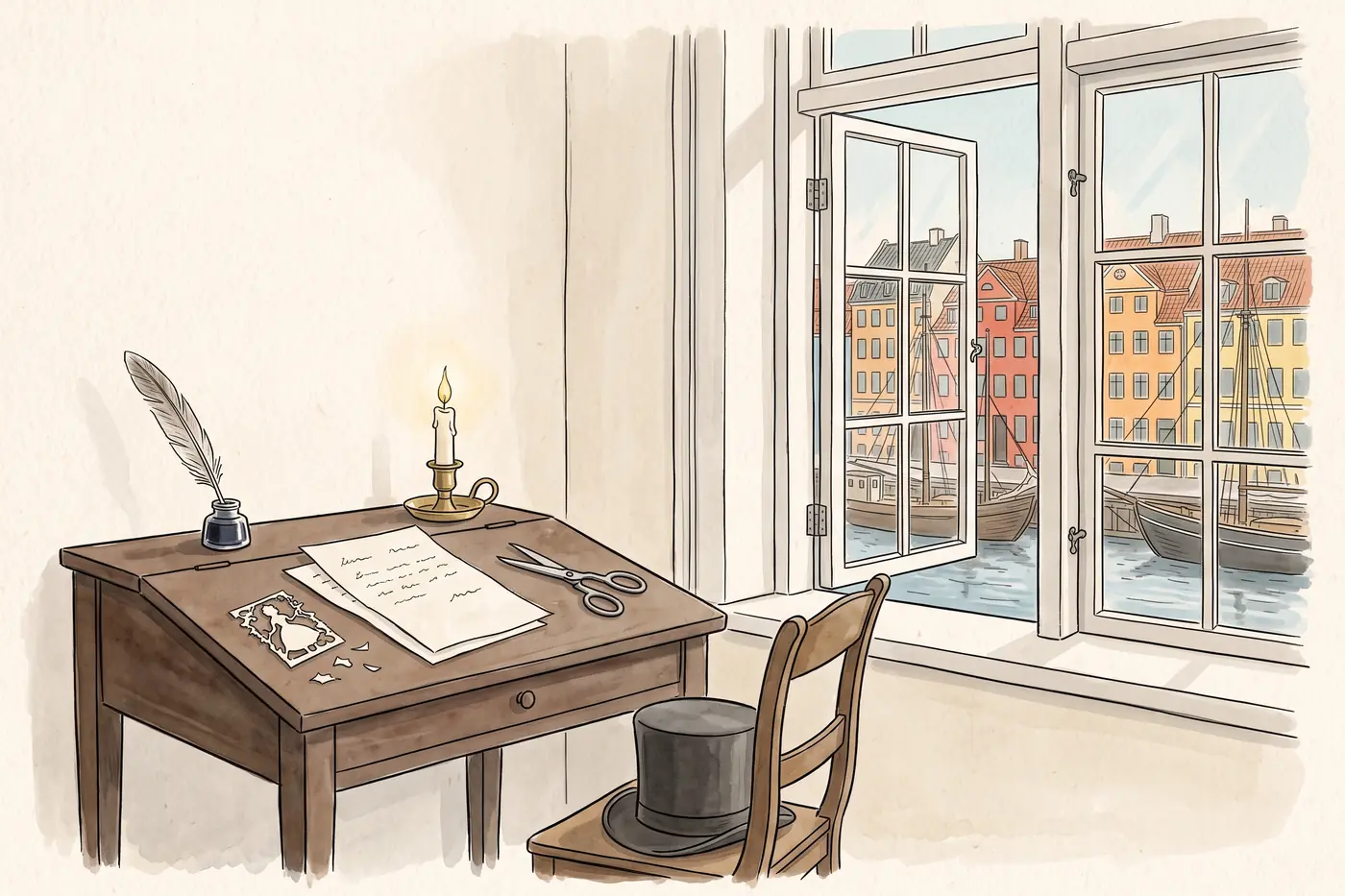
Hans Christian Andersen in Nyhavn
Der Schriftsteller wohnte an drei Stellen am Kai – wo die Märchen begannen und wo der Mythos über seinen Tod falsch ist.
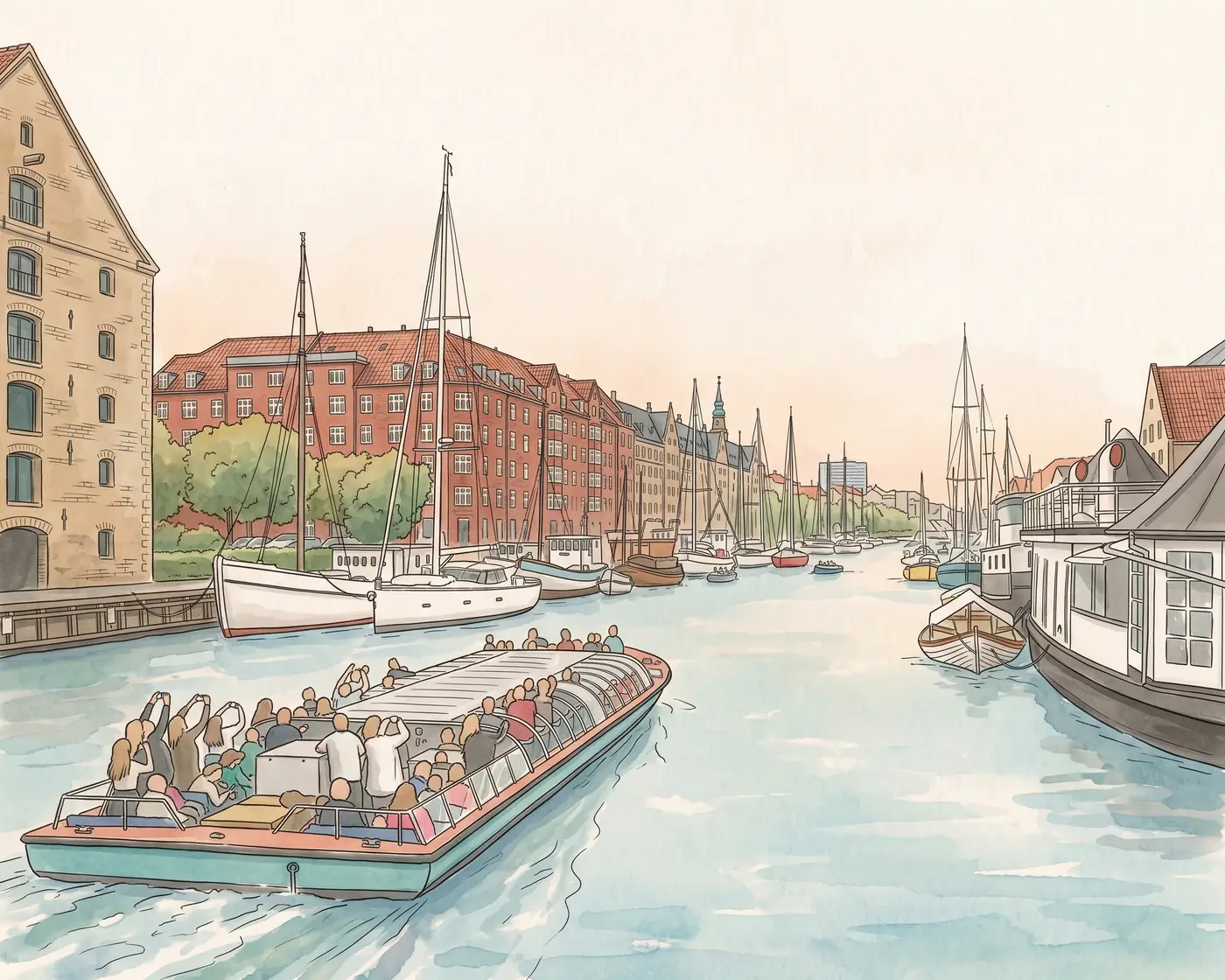
Kanalrundfahrt ab Nyhavn
Kanaltouren, ehrlich verglichen – welche sich zu buchen lohnt.